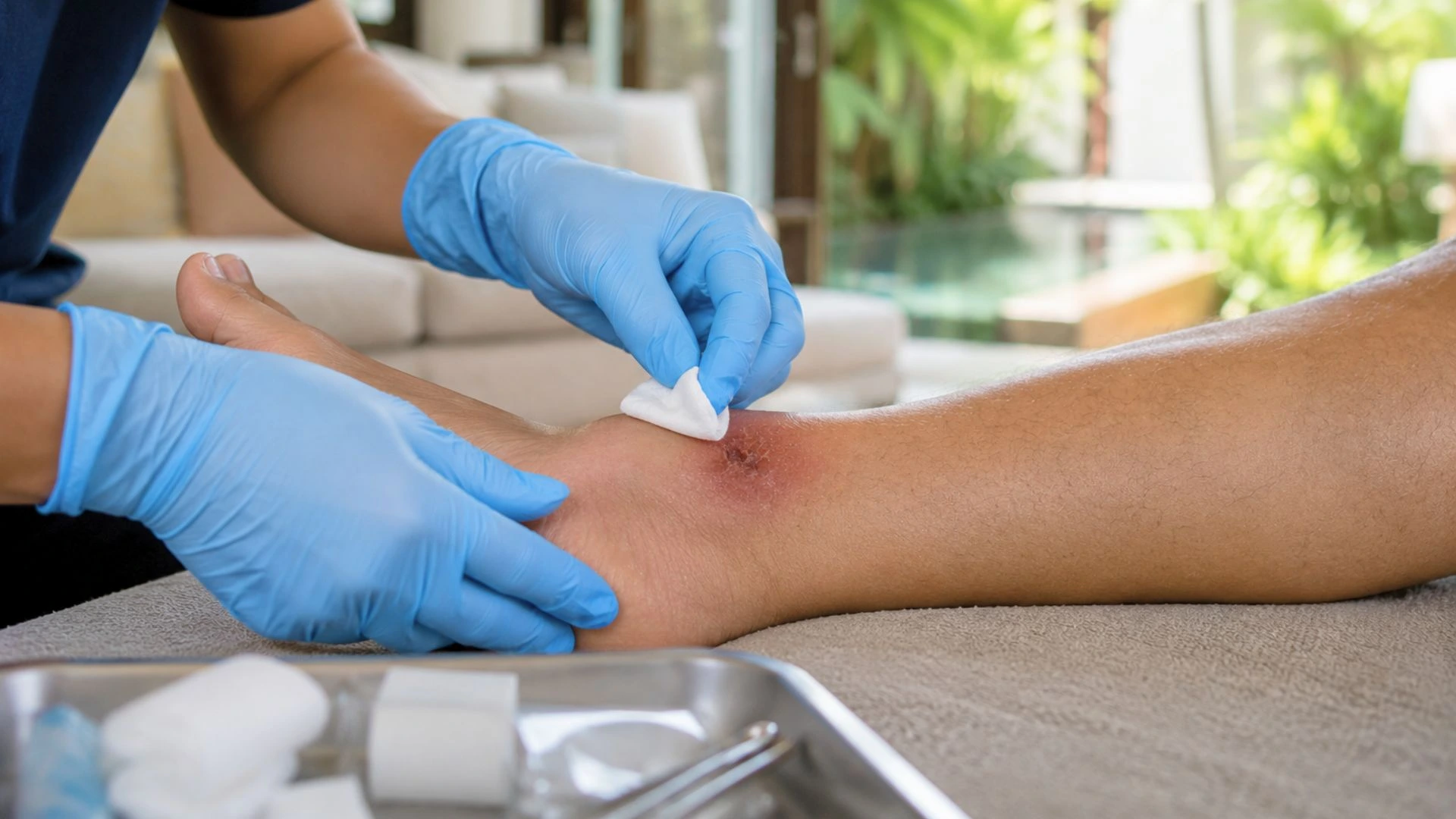
Coral Cuts in Bali: Causes, Infection Risk, and the Right First Aid Steps

Bali's reef breaks attract surfers from around the world. Uluwatu, Padang Padang, Bingin, and Keramas offer some of the best waves in Asia, but they also put surfers in close contact with sharp, living coral. A wipeout, a wrong step, or a sudden set wave can send you scraping across the reef in seconds.
Coral cuts look deceptively minor. They are not.
Understanding what makes a coral cut different from an ordinary wound, and knowing how to treat one correctly from the start, is one of the most important things any surfer in Bali can know.
Why Coral Cuts Are Not Like Ordinary Wounds
A coral cut is not simply a scratch from a hard surface. Coral is a living organism, and when it breaks the skin, it leaves behind fragments of organic material, bacteria, and microscopic organisms embedded in the wound. These contaminants are often invisible to the naked eye and difficult to remove without thorough cleaning.
This is what makes coral cuts far more prone to infection than cuts from glass, metal, or rock. The organic debris left inside the wound creates a persistent inflammatory response, and Bali's warm, humid tropical environment accelerates bacterial growth significantly. A coral cut that is not cleaned properly can begin showing signs of infection within 24 to 48 hours.
There is also the issue of the ocean water itself. Seawater around Bali's reef breaks contains a diverse population of bacteria, some of which are resistant to common antibiotics. Vibrio species, in particular, are found in tropical seawater and can cause rapidly progressing skin and soft tissue infections in wounds exposed to the ocean.
Common Situations That Lead to Coral Cuts in Bali
Most coral cuts happen during wipeouts, when the wave drives a surfer into the reef. Shallow reef breaks like Uluwatu and Padang Padang are particularly high risk because the water over the reef is thin, especially at low tide. The force of a wave on a shallow reef leaves very little margin between the surfer and the coral surface.
Standing up on the reef to recover after a wipeout is another common cause. The instinct to find your footing quickly is natural, but bare feet and hands pressing onto coral almost always result in cuts and abrasions.
Bodyboarders, snorkelers, and swimmers exploring Bali's reef areas face similar risks. Even a gentle current that pushes you sideways against coral can produce significant grazes across exposed skin.
How to Treat a Coral Cut Correctly
Getting the first aid right immediately after a coral cut makes a significant difference to how the wound heals over the following days.
Step 1: Get out of the water. Leave the ocean as soon as possible to stop further exposure to seawater and reduce the risk of additional contamination.
Step 2: Rinse thoroughly with clean fresh water. Rinse the wound under clean, running fresh water for several minutes. This helps flush out loose coral fragments, bacteria, and debris from the surface of the wound. Do not use seawater for rinsing, as it introduces more bacteria rather than removing them.
Step 3: Remove visible debris carefully. Use clean tweezers or the edge of a sterile gauze pad to gently remove any visible coral fragments from the wound. Take your time with this step. Fragments left inside the wound are the primary cause of the delayed infections and persistent inflammation that surfers often experience days after a reef cut.
Step 4: Apply antiseptic. Once the wound is clean and debris has been removed, apply an antiseptic solution such as povidone-iodine or chlorhexidine to the wound and surrounding skin. These are available at pharmacies across Bali. Avoid applying alcohol directly to the wound, as it damages tissue and impairs healing.
Step 5: Cover the wound. Apply a sterile non-stick dressing to protect the wound from further contamination. Change the dressing at least once a day, or immediately if it becomes wet or dirty. Keep the wound covered and as dry as possible between changes.
Step 6: Monitor closely for infection. Check the wound carefully each day. Increasing redness spreading beyond the wound edges, warmth, swelling, pain that is worsening rather than improving, pus or discharge, and fever are all signs that infection has set in and requires medical attention.
What Not to Do
Do not ignore a coral cut because it looks small. The size of the surface wound does not reflect the depth of contamination beneath it.
Do not return to the ocean until the wound has fully healed. Repeated exposure to seawater introduces new bacteria, prevents the wound from closing, and significantly increases the risk of a serious infection developing.
Do not apply sand, soil, or homemade remedies to the wound. These introduce additional contamination and slow healing.
Do not attempt to treat a visibly infected coral cut with over-the-counter antiseptic alone. A wound that is already infected requires a medical assessment to determine whether antibiotics are needed.
When to See a Doctor
See a doctor if the wound is deep, jagged, or contains embedded coral fragments that you cannot remove cleanly. Deep wounds may require professional debridement, which is the medical removal of contaminated or damaged tissue, to heal properly.
Seek medical attention if you notice signs of infection within the first two to three days. Redness spreading outward from the wound, increasing pain, swelling, fever, or any discharge from the wound are clear signals that bacteria have established themselves and oral or topical antibiotics are likely needed.
If you develop a fever alongside a rapidly worsening wound, seek care promptly. Infections from tropical seawater bacteria can progress quickly and become significantly harder to treat the longer they are left.
Bali Doctor provides clinic consultations and on call home visits across the island, with English-speaking physicians available seven days a week. A doctor can properly assess the wound, remove embedded debris, prescribe antibiotics where needed, and advise on wound care going forward.
👉 Contact Bali Doctor via WhatsApp to book a clinic consultation or arrange a home visit at your villa or hotel.
Prevention: How to Reduce Your Risk on Bali's Reefs
Wearing a full-length wetsuit or rash guard significantly reduces the skin surface exposed to coral during a wipeout. Reef booties protect the soles of the feet, which are among the most commonly injured areas on shallow reef breaks.
Learning the reef at your surf spot before paddling out reduces the risk of unexpected contact. Know where the shallow sections are, which direction the current runs after a wipeout, and how to position yourself to avoid being pushed onto the reef by a wave.
If you do get pushed onto the reef, cover your head and face with your arms rather than reaching out with your hands. Your forearms are a more acceptable surface for reef contact than your palms or face.
Carrying a basic wound care kit in your surf bag, with antiseptic solution, sterile gauze, and adhesive dressings, means you can begin first aid immediately rather than waiting until you reach your accommodation.